A Landscape Beyond the Canon
Southern Italy has long been overshadowed by the cultural gravity of cities such as Rome, Florence, and Venice. Yet, the Mezzogiorno offers a constellation of lesser-known destinations whose historical depth and environmental diversity rival those of their more celebrated northern counterparts. From the rugged coasts of Calabria to the baroque towns of Sicily, this region reveals a layered narrative shaped by Greek colonists, Norman rulers, and Spanish viceroys. These influences persist not only in architecture and language, but also in patterns of settlement and agricultural practice, rendering Southern Italy an intricate palimpsest worthy of closer examination.
Matera and the Persistence of Antiquity
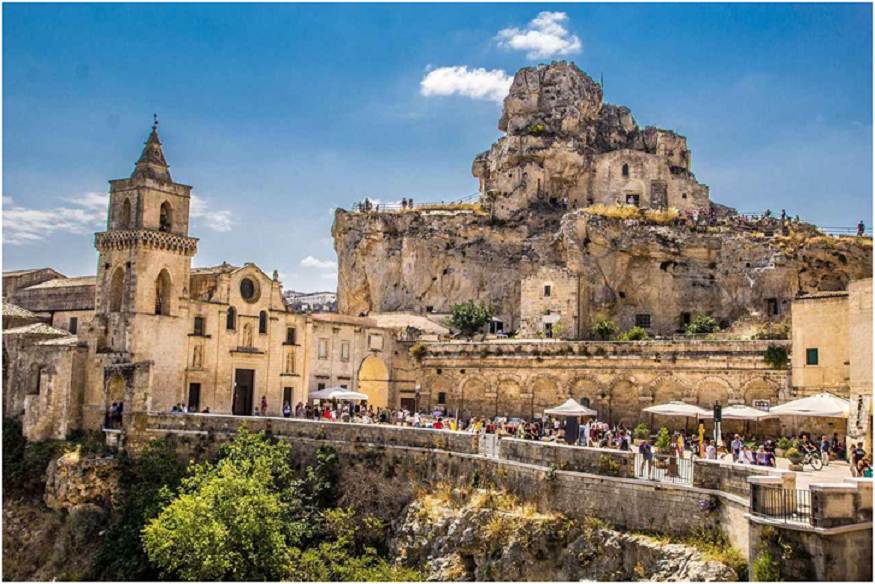
Among the most compelling sites is Matera, located in the Basilicata region. Its ancient cave dwellings, known as Sassi, are carved into limestone cliffs and have been continuously inhabited for millennia. Once considered a symbol of rural poverty, Matera has undergone a profound transformation, now recognized as a UNESCO World Heritage Site and a European Capital of Culture. The city exemplifies how adaptive reuse and cultural investment can reframe historical narratives, turning marginality into a form of distinction. Walking through its labyrinthine alleys, one encounters not only archaeological remnants but also contemporary art spaces and boutique accommodations embedded within ancient stone.
Read More: Privacy vs Access: How Costa Rica and Mexico Shape Two Very Different Luxury Travel Experiences
The Calabrian Coastline: Isolation and Authenticity
Calabria’s Tyrrhenian coast remains one of Italy’s least industrialized and least visited areas, preserving a sense of isolation increasingly rare in Europe. Towns such as Tropea, perched dramatically above the sea, offer striking vistas and a slower rhythm of life. The region’s limited accessibility has paradoxically safeguarded its authenticity, allowing traditional practices—from fishing methods to religious festivals—to persist largely intact. Calabria’s culinary traditions further reflect this continuity, emphasizing local ingredients such as chili peppers, bergamot, and preserved fish, which have been staples for centuries.
Apulia’s Quiet Shores and Subtle Contrasts
Apulia (Puglia), often associated with its iconic trulli houses and olive groves, also conceals coastal stretches of remarkable beauty that remain underexplored. Among these is the Bay of Turks in Puglia, a secluded expanse of fine sand and clear water framed by Mediterranean scrubland. Unlike the more commercialized beaches of the Adriatic, this area offers a restrained, almost contemplative environment. Its historical resonance—linked to Ottoman incursions—adds an additional dimension, reminding visitors that even tranquil landscapes may carry echoes of conflict and exchange.
Sicilian Hinterlands: Beyond Palermo and Taormina
While Sicily’s major cities attract significant attention, its interior regions provide equally compelling experiences. Towns such as Enna and Caltagirone reveal a different Sicily, one defined by agricultural cycles and artisanal traditions rather than tourism infrastructure. Caltagirone, renowned for its ceramics, demonstrates how local craftsmanship can sustain both economic activity and cultural identity. Meanwhile, Enna’s elevated position offers sweeping views of the island’s interior, underscoring Sicily’s geographical and cultural complexity. These inland destinations challenge the coastal bias that often shapes perceptions of Mediterranean travel.
Read More: The Absolute 52 Fly: Independent Industry Validation for a Future-Proof Investment
Rethinking Culinary Identity
Exploration of Southern Italy inevitably leads to its gastronomy, which resists simplistic categorization. Increasingly, scholars and writers propose an interesting perspective on the Italian cuisine, suggesting that what is commonly perceived as a unified national tradition is, in fact, a mosaic of highly localized practices. Southern regions exemplify this diversity: Neapolitan pizza, Sicilian arancini, and Apulian orecchiette emerge from distinct historical and ecological contexts. This fragmentation does not diminish coherence but rather highlights the adaptive ingenuity of regional cultures, each responding to specific environmental and social conditions.
Preservation and the Ethics of Discovery
The growing interest in Southern Italy’s lesser-known destinations raises important questions regarding sustainability and cultural preservation. Increased visibility can bring economic benefits, yet it also risks eroding the very qualities that make these places distinctive. Responsible travel, therefore, requires a balance between curiosity and restraint, encouraging engagement that is both informed and respectful. By approaching these regions with a critical awareness of their historical and social contexts, visitors can contribute to a form of tourism that supports rather than disrupts local communities.
A Region Reconsidered
Southern Italy’s hidden gems offer more than aesthetic pleasure; they invite a reconsideration of how cultural value is assigned and recognized. By moving beyond canonical destinations, one encounters a richer and more nuanced understanding of Italy itself—one that acknowledges complexity, diversity, and continuity. Such exploration does not merely expand the geographical scope of travel but also deepens its intellectual and cultural significance.